But if you’ve ever looked for a cable to connect your router, PC, or gaming console, you’ve likely noticed the confusing labels: Cat5e, Cat6, Cat6a, etc. These "Categories" refer to the performance standards of the cable. Choosing the right one can mean the difference between buffering streams and lightning-fast downloads.
Here is a simple breakdown of the most common cable types.
Cat5e (The Old Reliable)
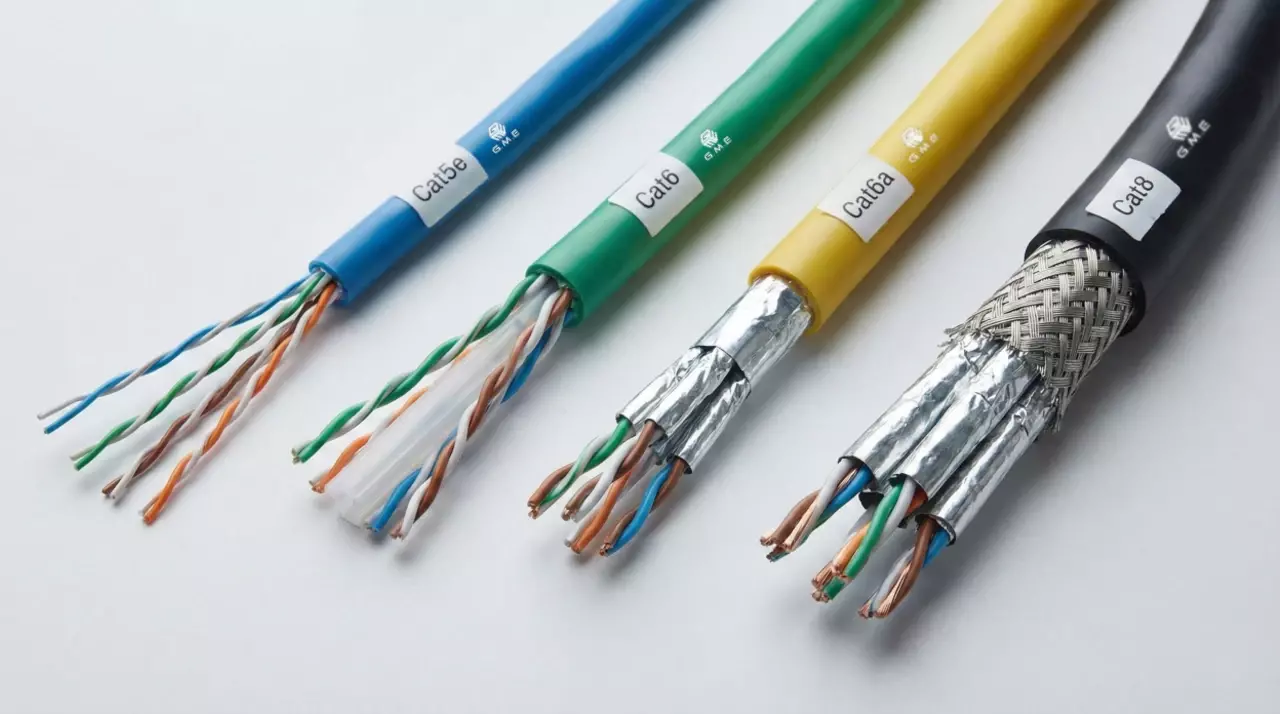
Best for: Basic home internet, older devices. "Category 5 Enhanced" was the standard for years. It is inexpensive and flexible, making it easy to route around corners. While it can technically handle Gigabit speeds (1,000 Mbps), it lacks the internal shielding required to prevent interference in modern, tech-heavy homes.
Speed: Up to 1 Gbps4
Bandwidth: 100 MHz
Cat6 (The Current Standard)
Best for: Most homes, small offices, and gaming. If you are wiring a new house or office today, Cat6 is the minimum standard you should use. Cat6 cables often feature a plastic "spline" (divider) running down the center that separates the internal wires. This reduces "crosstalk" (signal bleeding between wires), allowing for faster data transfer.
Speed: 1 Gbps (up to 10 Gbps over short distances < 55 meters)
Bandwidth: 250 MHz7
Cat6a (The High Performer)
Best for: Commercial offices, 4K video editing, future-proofing. The "a" stands for "Augmented." These cables are thicker and often shielded. They are designed to maintain 10 Gigabit speeds over the full 100-meter length of a standard cable run. If you are running cables through walls that you don't want to replace for 20 years, choose Cat6a.
Speed: 10 Gbps
Bandwidth: 500 MHz
Cat7 & Cat8 (The Data Center Grade)
Best for: Server rooms, heavy enterprise use. For 99% of residential and small business users, these are overkill. Cat8 is currently the fastest copper Ethernet cable available, designed for data centers where massive amounts of data move between servers. They are thick, stiff, and expensive.
Speed: 25 Gbps – 40 Gbps
Bandwidth: 2000 MHz (Cat8)
Quick Comparison Table
| Category | Max Speed | Bandwidth | Typical Use |
| Cat5e | 1 Gbps | 100 MHz | Basic Home / Older installs |
| Cat6 | 1 Gbps / 10 Gbps* | 250 MHz | Standard Home & Office |
| Cat6a | 10 Gbps | 500 MHz | High-End Office / Multimedia |
| Cat8 | 40 Gbps | 2000 MHz | Data Centers |
*Cat6 can hit 10 Gbps only over short distances (usually under 55 meters).
Which Should You Choose?
For a professional installation in an Irish business or home renovation, Cat6 or Cat6a is the sweet spot. They offer the perfect balance of performance, price, and future-proofing without the excessive cost of data-center cabling.